Suited to
Price on application
Ex-ground specimens are quoted individually: the tree, the lift, delivery and craneage assessed for your site.
River birch peels. Curls of cinnamon, salmon and pale cream lift away from the trunk in sheets, and on a mature tree the effect is closer to sculpture than bark. The foliage is fine and slightly pendulous, casting the light dappled shade birches are planted for, and it turns clear yellow before dropping.
In the landscape
Best used in groves rather than singly, three or five trees at 3–4 m centres, single-leader or multi-stem, will read as one canopy and let the bark repeat. Site it where the winter trunk is seen: against a dark hedge, a rendered wall or under uplighting. It suits pond edges, swales and low-lying ground that defeats most other birches, and underplants well with shade-tolerant groundcovers, hellebores and ferns.
Growing notes
Deciduous. The most heat- and humidity-tolerant of the birches and largely untroubled by the borers that shorten the life of silver birch, which makes it the sound choice across Victoria, New South Wales, the ACT, South Australia and highland or southern Queensland. Fully frost hardy. It prefers moist, acidic soils and will tolerate ground that is seasonally wet; on alkaline soils the foliage yellows. Growth is fast in youth, reaching roughly 10–15 m tall by 6–9 m wide in the ground. It is not a drought tree, plan for reliable moisture through summer.
This tree
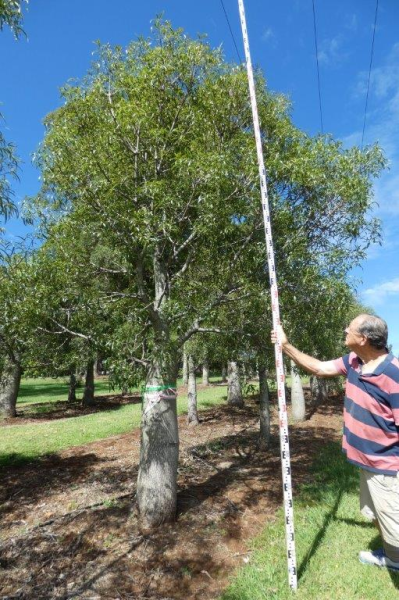
- Height: 4.0 m
- Canopy width: 2.0 m
- Caliper: 80 mm
- Currently standing: 50 trees
Field-grown ex-ground at Ravensbourne Farm, root-pruned and basket-lifted, delivered and craned Australia-wide. Price on application through the Shortlist.
Every numbered specimen travels with its Tree Passport: farm, row, year planted, root-management history and current measurements.