Price on application
Ex-ground specimens are quoted individually: the tree, the lift, delivery and craneage assessed for your site.
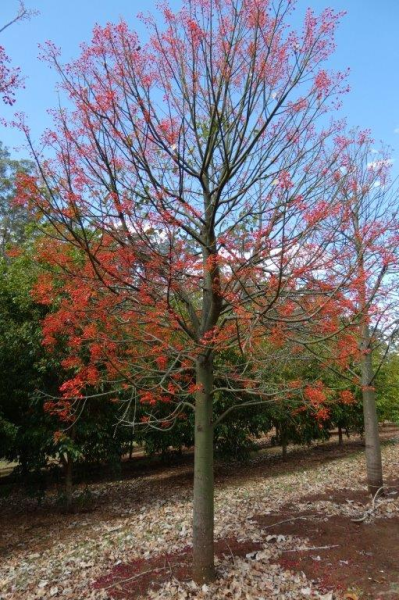
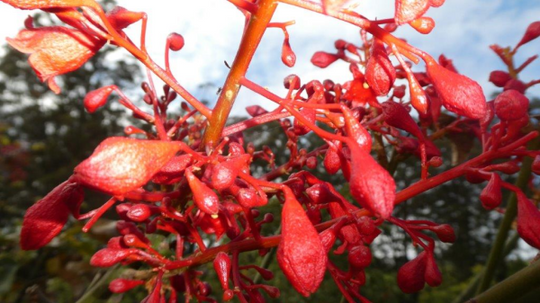
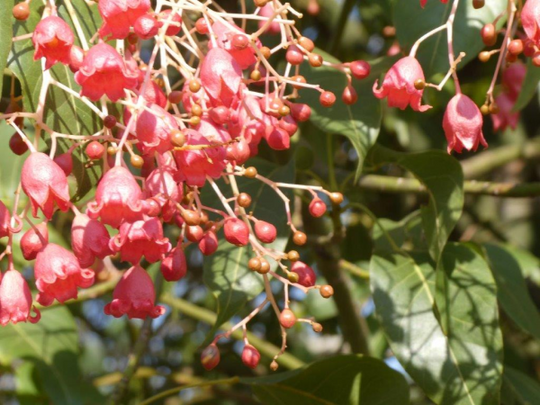
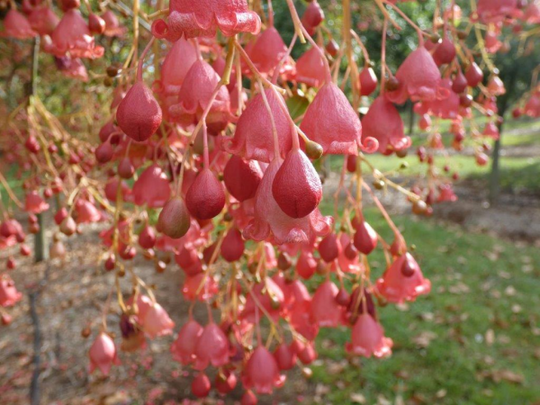
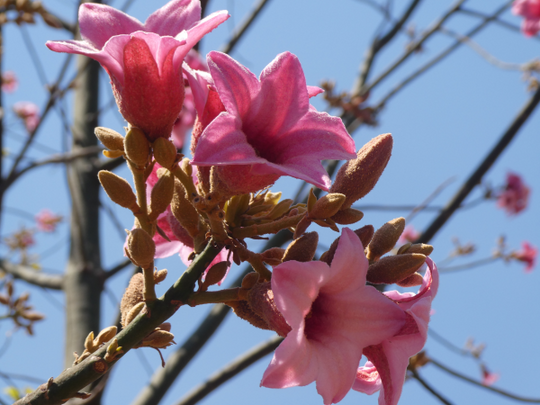
The lacebark is the quieter, larger cousin of the flame tree, pale, finely fissured bark, downy grey-green lobed leaves, and thick felted pink bells with deep red throats that open on bare branches through high summer. At maturity it is one of the most substantial flowering shade trees available in Australia.
In the landscape
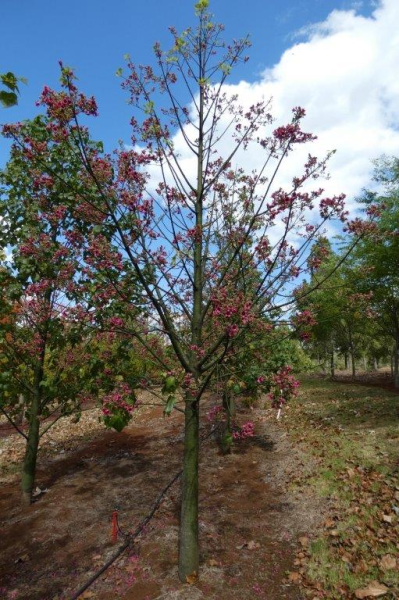
A street and shade tree of real substance, with a rounded canopy and roots that behave near paving and services. Effective as an avenue at 8–10 m centres, as a shade tree over lawn, or as a screen when planted in a run. The pale lacy bark and grey-green foliage sit well against dark rendered or timber facades, and the flowering happens on bare branches in high summer, when little else of this scale is in colour.
Growing notes
Deciduous around flowering, dropping its downy grey-green lobed leaves before the felted bells open from November to January. Suited to Queensland, coastal and inland New South Wales, and warm districts of Victoria; tolerant of moderate frost, pollution, coastal exposure and tropical heat. Fast growing in most soils, reaching about 10–20 m tall by 6–10 m wide in the ground. Hardy and drought tolerant once established.
This tree
- Height: 7.0–7.5 m
- Canopy width: 4.0–4.5 m
- Caliper: 250–300 mm
- Currently standing: 24 trees
Field-grown ex-ground at Ravensbourne Farm, root-pruned and basket-lifted, delivered and craned Australia-wide. Price on application through the Shortlist.
Every numbered specimen travels with its Tree Passport: farm, row, year planted, root-management history and current measurements.