Suited to
Price on application
Ex-ground specimens are quoted individually: the tree, the lift, delivery and craneage assessed for your site.
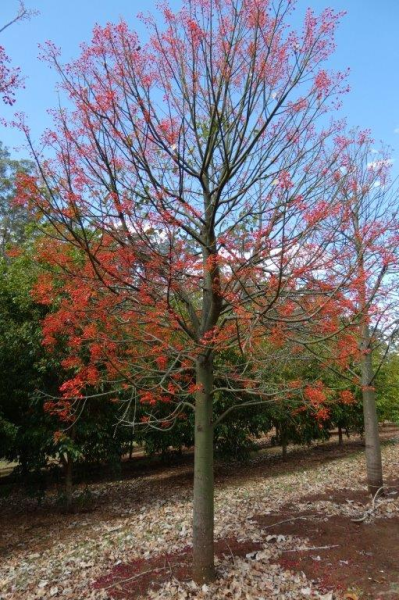
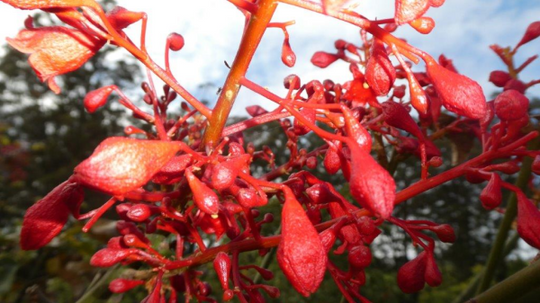
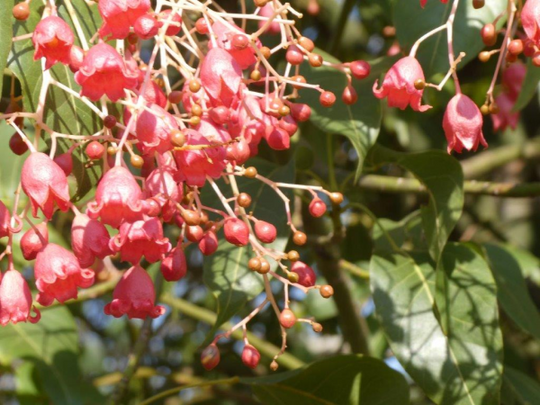
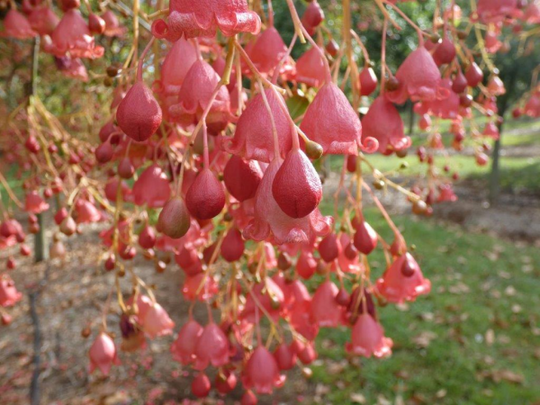
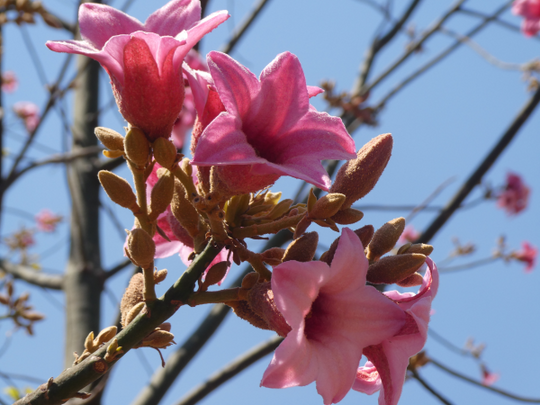
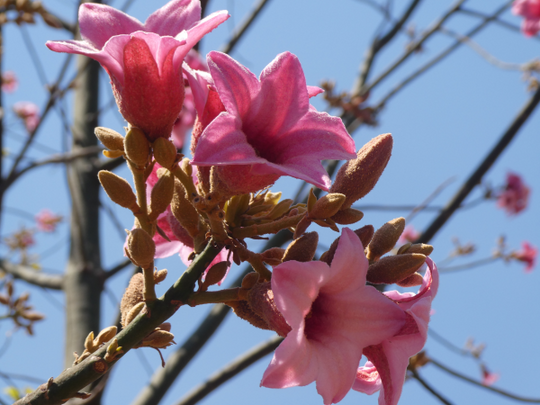
Nothing else in the Australian landscape looks like a bottle tree. The trunk swells into a smooth grey flask that carries the whole character of the tree, topped by a modest crown of narrow leaves and, in late spring, clusters of pendulous cream and pink bells. It is the signature tree of the Darling Downs and it holds a space the way a piece of sculpture does.
In the landscape
Site it as an object, not as background, a clean forecourt, a gravel courtyard, a roundabout, or a run down a driveway at 8–10 m centres where the repeated trunks do the work. Keep the base clear so the flask is visible. It suits water-wise and hot-climate schemes, sits well against rendered and stone architecture, and is remarkable among large trees for how well it takes relocation, which is why mature specimens are so often moved into finished landscapes. The trunks in this line already carry 400–500 mm calipers, so the bottle form is well developed on arrival.
Growing notes
Semi-deciduous around flowering, with pendulous cream-pink bells in late spring. Very hardy across Queensland, New South Wales, Victoria and South Australia, and both frost and drought resistant once established. It prefers sandy, loamy or acidic soils and demands drainage, waterlogging is the one thing that reliably kills it. Growth is slow, which is part of why advanced stock matters here. In the ground expect roughly 10–20 m tall by 5–8 m wide over a long life, with the trunk continuing to thicken for decades. Tolerant of pollution, coastal exposure and tropical heat, with non-invasive roots.
This tree
- Height: 4.0–5.0 m
- Canopy width: 3.0–3.5 m
- Caliper: 400–500 mm
- Currently standing: 41 trees
Field-grown ex-ground at Ravensbourne Farm, root-pruned and basket-lifted, delivered and craned Australia-wide. Price on application through the Shortlist.
Every numbered specimen travels with its Tree Passport: farm, row, year planted, root-management history and current measurements.