Price on application
Ex-ground specimens are quoted individually: the tree, the lift, delivery and craneage assessed for your site.
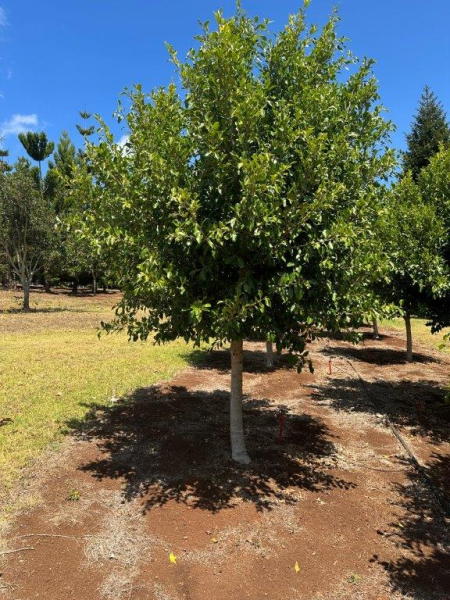
Ficus obliqua, the small-leafed fig, builds one of the finest shade canopies of any Australian native, a dense, rounded crown of small glossy leaves over a pale, ultimately buttressed trunk. It is a tree for projects with the room and patience for real grandeur.
In the landscape
A parkland and large-garden specimen first: given space it becomes a landmark shade tree in the manner of the great figs of Brisbane parks. Also proven in broad streetscapes, windbreaks and rural drives, and an important food source for native birds. Site it generously, allow 8–10 m from structures, paving and services in deference to its root system.
Growing notes
- Climate: native from northern New South Wales into Queensland; at home in tropical and subtropical zones and tolerant of light frost once established
- Evergreen, moderate to fast growing in warmth
- Soil: sandy through loamy soils, including acidic profiles
- Mature size in the ground: expect 8–15 m in cultivation, larger over decades on favourable sites
- Resistant to coastal exposure and urban pollution
This tree
- Height: 6.5–7.0 m
- Canopy width: 4.5–5.0 m
- Caliper: 260–330 mm
- Currently standing: 33 trees
- Field-grown ex-ground at Ravensbourne Farm, root-pruned and basket-lifted, delivered and craned Australia-wide; price on application through the Shortlist
Every numbered specimen travels with its Tree Passport: farm, row, year planted, root-management history and current measurements.